

This semester, I had the opportunity to participate in the Marginal Revolution Fellowship through the Mercatus Center at George Mason University. The program brings together students from across the country who are interested in economic communications for a semester of professional development.
It was an incredible experience. But it also made me notice something I hadn’t fully appreciated before: in a room full of budding economists, women were clearly in the minority.
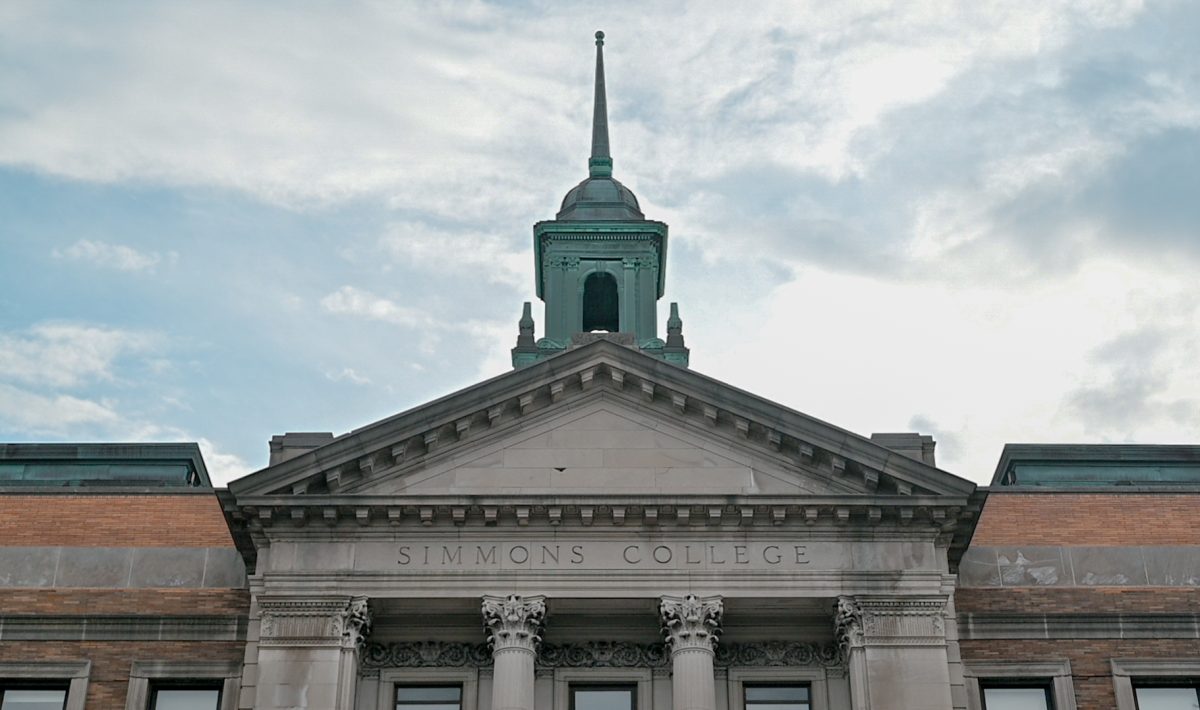
That reality isn’t unusual. The field remains one of the most male-dominated social sciences. But coming from Simmons University, a women-centered institution, the experience felt noticeably different from the academic spaces I’m used to.
At Simmons, our gender-diverse student body leads discussions in our classrooms. Students present research, challenge ideas and pursue fields that are still male-dominated nationally. Even in courses like economics, it’s assumed that women and other gender-marginalized students will speak up and take pride in their ideas.
That expectation matters more than we might realize.
During the fellowship discussions, I felt comfortable jumping into conversations, asking questions and challenging my peers’ arguments.
Of course, any student surrounded by talented peers can feel intimidated at times. But the kind of imposter syndrome some of the other women in the program described felt much less familiar to me.
Several of them talked about being one of only a few women in their economics classes back home. In that kind of environment, speaking up can feel riskier. When you’re already one of the only women in the room, there can be pressure not to make mistakes or draw attention to yourself.
Women-centered colleges disrupt that dynamic.
When women and gender-diverse students are the majority in every classroom, every leadership role and every academic discipline, the expectation that men will dominate certain fields simply disappears.
That kind of environment builds confidence in ways that can be easy to take for granted while we’re here.
It wasn’t until I left campus for the fellowship that I realized how much my experience at Simmons had shaped how I approach academic spaces.
The confidence I felt participating in conversations about economic theory and policy wasn’t something I suddenly developed. It came from years of learning in classrooms where women’s voices were expected to shape the conversation.
Sometimes people question whether women-centered colleges are still necessary in a world where most universities are co-educational. But experiences like mine suggest the opposite.
As long as fields like economics, computer science, chemistry and physics remain heavily male-dominated, spaces that intentionally cultivate women’s leadership still serve an important purpose.
Women-centered colleges don’t isolate students from the broader world. If anything, they prepare us to enter it more confidently.
Walking into a room where women were the minority didn’t make me quieter. Instead, it made me realize how powerful it is to have spent years learning in a place like Simmons, where women’s voices were uplifted.




Patricia Kane • May 25, 2026 at 7:19 pm
As a graduate of an all female high school (Girls Latin School) and Simmons College (’64), I am eternally grateful for my segregated education because it gave me time to develop and focus on my personal goals and even to experience “the life of the mind”.
Simmons still offers that experience, but how is its current purpose defined?
For the Class of 1964 it was to prepare women for the world of work. The course offerings were largely specific to a profession such as education, nursing, etc. As a closet Liberal Arts person, Political Science was a good place to hide out. Reading great literature, studying French and Russian, pursuing knowledge for its own sake and not for a job: those were my choices.
Having Malcolm X speak at the College was a bonus.
By the time I went to law school, it was too late for anyone to tell me to hold back on my thoughts and opinions.
I wish I could say society has advanced to the point where women don’t need an educational institution that focuses on them, but as long as a Kardashian/Jenner or Real Housewife polllute our culture, then we need a place for women (and men) to learn and thrive free of cultural expectations.
The mission continues.