

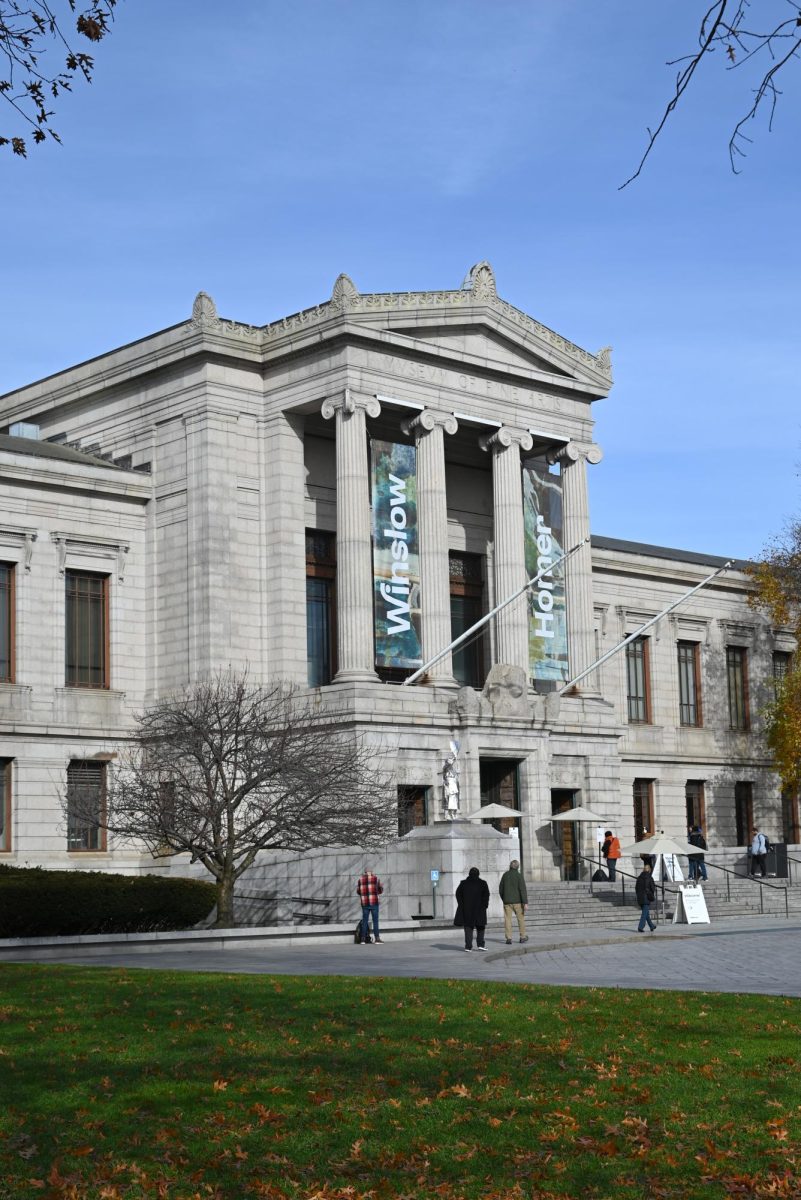
Two years following the Museum of Fine Arts’ (MFA) “Hear Me Now: The Black Potters of Old Edgefield, South Carolina” exhibit, the museum returned two jars made by David Drake to his descendants, most of whom now live in the Washington, D.C. area. In a press release, the museum stated that they had come to an agreement with Drake’s descendants.
Drake, born in the early 1800s, was an enslaved man, involuntarily made to create pottery for his enslaver, Lewis J. Miles. ln the western part of South Carolina, Drake — also known as Dave the Potter — made thousands of ceramics, which would later be sold for his enslaver’s profit. As Drake worked and produced progressively larger pots, he began to sign, date, and inscribe his works with poems. His pots, inscribed with poems, were an outlier among enslaved artwork, with literacy of enslaved people being criminalized during his time.
As the agreement describes, the MFA would return the pottery to his descendants and buy back one of the jars. The re-purchased jar is known as the “Poem Jar.” Dated Aug. 22, 1857, it is engraved with a couplet: “I made this Jar = for cash / Though its called Lucre trash.” Drake’s work as a jar maker and his jars were often underestimated in value because of his status as an enslaved person. In this poem, however, he is challenging that fact.
The other jar remaining in the museum is the “Signed Jar,” dated Sept. 22, 1857. It is on a long-term loan — meaning it will stay at the museum, despite the family’s ownership — from the family to the MFA with the family’s permission.
“His works tell important stories… to share his accomplishments as a talented artist, and to also call attention to the conditions…under which he lived and worked,” said Pierre Terjanian, Director of the MFA, in the press release.
The MFA’s return of the jar to Drake’s descendants is consistent with the museum’s return of art stolen following the Holocaust and the return of multiple stolen objects to Benin. This, however, marks the first time a museum is returning an enslaved person’s belongings or products. Other museums have returned items stolen in the slave trade, like the Smithsonian and the Getty in Los Angeles.
The “Poem Jar,” now officially back in the museum’s collection, is on view in the Art of the Americas wing of the museum in the Joyce and Edward Linde Gallery.